
800-U-SHIP-IT (874-4748) Los Angeles, CA · Serving 150+ Countries FMC-Licensed NVOCC #001803
0%

Intermodal Transportation moves freight through multiple transport modes without unloading the cargo itself. A sealed container may travel by truck, rail, and ship before reaching a distribution center. The cargo stays protected inside one loading unit. Only the vehicle changes.

Geographer Jean-Paul Rodrigue defines it this way: “Intermodal transport is the use of two or more modes of transportation in the movement of a shipment.” His research, published through The Geography of Transport Systems, helps explain why this method matters. It connects ports, rail terminals, highways, warehouses, and customers within one coordinated journey.

In practical operations, a truck collects a container from a factory. A crane then transfers it onto a train. At the port, another crane places it onto a vessel. Digital tracking records each handoff. Schedules, equipment availability, weather, and terminal congestion can still disrupt the plan.

That is the difficult part.

Intermodal Transportation can lower fuel use, reduce highway pressure, and improve long-distance efficiency. Rail often handles the heavy inland movement, while trucks provide flexible first- and last-mile service. Yet these benefits are not automatic. A delayed train can create storage costs, missed vessel connections, and frustrated customers.

The system looks seamless from outside. It rarely feels seamless inside the operation. Reliable results depend on accurate documents, trained staff, compatible equipment, and honest performance data. Some explanations also overstate its environmental advantages. The real impact depends on distance, cargo type, route design, and energy sources.

This guide examines how Intermodal Transportation works, where each mode fits, and why coordination determines success.
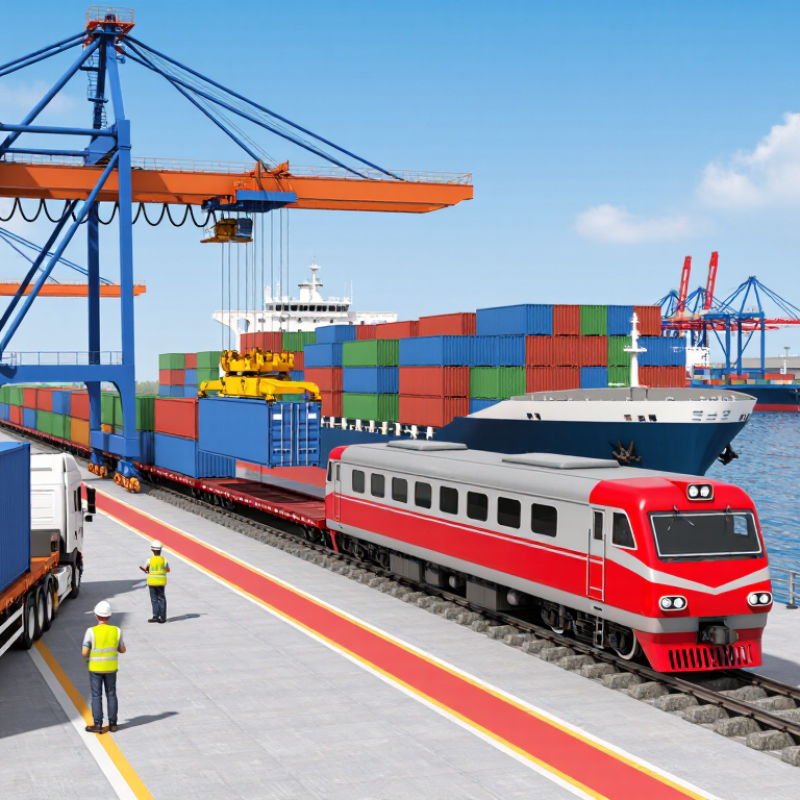
What Is Intermodal Transportation and How Does It Work?

Definition and Core Principles of Intermodal Transportation

Intermodal transportation moves freight through two or more transport modes while keeping the cargo inside one loading unit. A sealed container may travel by truck, rail, and vessel without unloading the goods at each transfer. The load stays sealed. That detail matters.

Its core principle is continuity. The cargo, identification, and handling instructions should remain consistent across the journey. Trucks often cover the first or final kilometres, while rail or water transport handles longer distances. Each mode contributes a different strength. Road transport offers access, rail can provide stable long-distance movement, and water transport may support high-volume shipping.

Reliable intermodal planning begins with matching the route to the cargo. A logistics team checks weight limits, transfer times, terminal capacity, weather exposure, and delivery deadlines. Digital tracking can record handoffs, delays, and container conditions, but data is only useful when workers update it accurately. Clear responsibility between carriers also reduces confusion when a shipment arrives late or a seal needs inspection.

The model is not flawless. A missed rail connection can affect several later steps. Poorly designed transfer points may create waiting time that removes the expected efficiency. In practice, experienced planners build realistic time buffers and review past delivery records before choosing a route. They also compare total cost, fuel use, service reliability, and cargo protection instead of focusing on one attractive figure. This balanced approach makes intermodal transportation a coordinated process rather than a simple change of vehicles.

What Is Intermodal Transportation and How Does It Work?

Intermodal transportation moves freight through two or more transport modes—most commonly rail and truck—while the cargo remains in the same standardized container. This approach combines the long-distance efficiency of rail or water with the flexible pickup and delivery of trucks.

The chart compares approximate freight movement efficiency in ton-miles per gallon. Rail and inland water transport generally use less fuel per ton-mile than trucks, which is why intermodal networks often use trucks for short first- and last-mile connections and rail or water for longer portions of a journey. Values are U.S. average benchmarks and vary by route, equipment, load factor, and operating conditions.

Source: U.S. Department of Transportation and U.S. Department of Energy freight transportation efficiency benchmarks.

Key Modes and Equipment Used in Intermodal Shipping

What Is Intermodal Transportation and How Does It Work?

Intermodal transportation moves one shipment through several transport modes without unloading its cargo. A sealed container may travel by truck, rail, and ocean vessel. The goods stay inside the same unit during each transfer. This reduces handling damage and can improve planning across long distances. However, intermodal shipping is not automatically faster. A missed train connection can delay delivery for hours or days.

The main modes are road, rail, sea, and sometimes inland waterway transport. Trucks usually handle the first and final miles. Rail supports long inland distances with lower fuel use per container. Ships move large volumes between ports. Inland barges can serve routes with suitable rivers and terminals. Each mode requires different planning, weight controls, and arrival schedules.

Standard equipment makes these transfers possible. Intermodal containers use strong corner castings for lifting and stacking. Chassis support containers during local truck movements. Cranes and reach stackers move units between vehicles, railcars, and storage areas. Twist locks secure containers to chassis and rail platforms. Seals, inspection records, and tracking data help confirm container condition and movement. In practice, small details matter: a damaged door seal, incorrect container weight, or incompatible chassis can interrupt the entire route. Experienced planners check equipment dimensions, terminal rules, weather risks, and connection times before dispatch. Even then, the plan may need revision. Reality is less tidy.

How an Intermodal Shipment Moves from Origin to Destination

Intermodal transportation moves one shipment through two or more transport modes, usually in one sealed container. A shipment may leave a factory by truck, travel long distance by rail, and reach a port or warehouse by truck again. The cargo itself is not repeatedly unloaded. The box stays sealed. This reduces handling, although it does not remove every risk. At origin, staff verify the cargo description, weight, dimensions, destination, and shipping documents. They inspect the container before loading. A damaged door or inaccurate weight can create trouble later.

After pickup, a truck carries the loaded unit to a rail terminal or port. Terminal workers record its arrival, check the seal, and transfer it with lifting equipment. The transport plan depends on schedules, available equipment, route restrictions, and legal requirements.

Tracking events may show pickup, terminal entry, departure, interchange, and final delivery. These updates are useful, but they are not always real-time. Weather, congestion, inspections, or a missed connection can change the estimated arrival. Small delays matter.

At the next interchange, the container moves without opening, while responsibility shifts between transport providers. A destination truck collects it after release and drives to the receiving site. There, the consignee checks the seal, visible condition, and delivery records before unloading. In my experience, clear handoffs prevent more disputes than impressive tracking screens. Still, intermodal planning is not flawless. A route can look efficient on paper yet fail when equipment is scarce. Good operators leave practical time for exceptions, confirm every handoff, and review what went wrong after delivery.

Benefits, Challenges, and Cost Factors of Intermodal Transport

Intermodal transportation moves one shipment through several transport modes, such as truck, rail, and vessel, without unloading the cargo itself. A sealed container may leave a factory by truck, travel hundreds of miles by rail, then reach a customer by truck. This reduces repeated handling and can lower damage exposure. Rail and vessel legs may also produce fewer emissions than long-distance trucking. In practice, reliability depends on schedules, terminal capacity, and accurate handoffs.

The main challenge is coordination. A missed rail connection can leave a container waiting at a terminal for days. Storage charges, chassis fees, fuel adjustments, documentation, and local delivery costs can increase the final bill. Intermodal transport is not always cheaper, especially for short routes or urgent shipments. Shippers should compare the full landed cost, not only the quoted line-haul rate. They should also check transfer times, service frequency, cargo sensitivity, and seasonal congestion. A low estimate can become misleading.

Tips: Request a door-to-door quotation with every accessorial fee listed. Confirm terminal cut-off times and container availability before dispatch. Use tracking updates at each transfer point, and keep a small time buffer for delays. Photograph the container condition at pickup and delivery. I have found that simple checklists prevent more problems than complicated forecasts. Even then, assumptions need regular review.

What Is Intermodal Transportation and How Does It Work? - Benefits, Challenges, and Cost Factors of Intermodal Transport
Category Data Dimension Typical or Standard Data How It Works in Practice Operational and Cost Impact
Definition Basic concept Two or more transport modes are used for one shipment. Cargo remains inside the same loading unit while the unit is transferred between truck, rail, ship, or barge. Reduces repeated cargo handling and can combine the flexibility of road transport with the efficiency of rail or water transport.
Process Typical shipment sequence Origin pickup → consolidation terminal → long-distance rail or water movement → destination terminal → final delivery. Each transfer normally moves the container or trailer rather than the individual products. Requires accurate scheduling, compatible equipment, documentation, and coordination among multiple transport providers.
Equipment Common loading units Standard dry containers, refrigerated containers, tank containers, and swap bodies. Intermodal terminals use cranes, reach stackers, gantry systems, or specialized lifting frames to transfer units. Standardized equipment lowers handling time and damage risk, but special cargo may require higher equipment and handling charges.
Container Nominal external dimensions 20-foot container: approximately 6.06 m × 2.44 m × 2.59 m. 40-foot container: approximately 12.19 m × 2.44 m × 2.59 m. Containers are built around internationally standardized dimensions so they can move across different modes. Standard dimensions improve network compatibility; usable internal capacity is lower than external volume because of wall and door structures.
Container High-cube option A 40-foot high-cube container is approximately 2.90 m high externally, about 30 cm taller than a standard-height unit. High-cube units are useful for lightweight, high-volume cargo that requires additional cubic capacity. May improve space utilization, but route clearance, terminal handling, and equipment restrictions must be checked.
Mode Road transport role Most commonly used for the first and last mile. Trucks collect cargo from the shipper and deliver it from the destination terminal to the consignee. High flexibility and door-to-door access; costs can rise because of fuel, tolls, driver availability, congestion, and waiting time.
Mode Rail transport role Best suited to scheduled inland movements over medium and long distances where terminal access is available. Containers or trailers are transferred between road vehicles and rail wagons at an intermodal terminal. Can reduce highway mileage and fuel exposure, but requires terminal access and is less flexible than direct trucking.
Mode Water transport role Ocean, coastal, and inland waterway services are generally used for large-volume or long-distance movements. Containers are loaded onto vessels or barges and connected to road or rail services at ports and inland terminals. High capacity and low unit cost for suitable lanes; transit time, port congestion, and schedule frequency can be limiting factors.
Transit Transit-time structure Total transit time equals line-haul time plus pickup, delivery, terminal handling, customs, and waiting time. A shipment can experience several planned handoffs even when the cargo itself is not unloaded. Intermodal service may take longer than direct trucking on short routes, but can provide better cost stability on longer routes.
Benefits Cost efficiency Rail and water generally use less fuel per tonne-kilometre than road transport, although results vary by route, load, and equipment. Long-distance movement is assigned to a mode with greater capacity, while trucks handle local collection and delivery. Potentially lower line-haul cost, especially for regular, dense, and long-distance freight flows.
Benefits Fuel and emissions Replacing part of a road journey with rail or water can reduce fuel consumption and transport emissions per unit of cargo. The actual reduction depends on distance, locomotive or vessel efficiency, electricity mix, load factor, and empty repositioning. Potential environmental benefit; emissions should be calculated using lane-specific data rather than a universal percentage.
Benefits Capacity and network resilience Using several modes provides alternatives when highways face congestion, restrictions, or capacity shortages. Long-haul volume can be shifted to rail or water while road vehicles continue serving local areas. Can improve network resilience, but disruptions at a major terminal may affect many shipments simultaneously.
Challenges Terminal dependency Intermodal routes require suitable terminals, handling equipment, connecting services, and available time windows. Containers may need to be repositioned, inspected, weighed, or temporarily stored during a transfer. Additional handling and dwell time can offset the savings of the long-haul mode.
Challenges Schedule coordination Missed rail, barge, vessel, or delivery appointments can create delays that are not present in a single-mode movement. Pickup times, terminal cut-offs, documentation deadlines, and final-mile appointments must be synchronized. Requires reliable tracking, contingency planning, and clear responsibility for delays at each handoff.
Challenges Visibility and liability A shipment may pass through several operators and facilities during one journey. Electronic status updates, standardized shipment references, and documented handover points help maintain control. Poor data integration can increase customer-service workload, claims risk, and inventory uncertainty.
Cost Line-haul charge The main movement charge is influenced by distance, mode, weight, volume, equipment type, and lane balance. Rates may be quoted per container, trailer, shipment, weight unit, or distance unit. Usually the largest cost component, but not always the most important factor in the final landed cost.
Cost First- and last-mile charges Local trucking costs depend on mileage, appointment requirements, driver time, fuel, tolls, and empty repositioning. Separate pickup and delivery legs are added to the rail, vessel, or barge movement. Short local legs can represent a significant share of total cost when terminals are far from shippers or consignees.
Cost Terminal and handling fees May include lift-on/lift-off charges, gate fees, storage, chassis or equipment use, and documentation services. Fees are usually triggered when the unit enters, leaves, or remains at a terminal. Dwell time is a major cost risk; storage and equipment-use charges can increase after free-time limits expire.
Cost Fuel and accessorial charges Fuel adjustments, tolls, congestion charges, security fees, customs services, and special handling may be added. These charges can be fixed, calculated as a surcharge, or adjusted according to an indexed cost. Quoted prices should state which surcharges are included and how adjustments are calculated.
Cost Inventory and time cost Longer or less predictable transit ties up working capital and may require additional safety stock. The financial impact includes the value of goods in transit, service-level penalties, and potential production disruption. The lowest transport rate is not always the lowest total logistics cost.
Suitability Best-fit shipment profile Regular, predictable, containerizable freight with sufficient volume and a practical terminal connection. Intermodal planning works best when pickup and delivery windows can accommodate scheduled line-haul services. Evaluate total cost, reliability, transit time, cargo requirements, and emissions together before selecting the route.
Note: Dimensions and operational ranges are indicative industry values. Actual transit times, rates, terminal charges, emissions, and equipment availability vary by country, route, season, cargo type, service schedule, and market conditions.

Industries and Situations Best Suited for Intermodal Transportation

Intermodal transportation suits industries that move large volumes over long distances. Manufacturers often use it for steel, machinery, packaged goods, and construction materials. A shipment may travel by truck to a rail terminal, cross several states by train, then reach a distribution center by truck. The cargo stays inside one container. That reduces repeated handling and lowers the chance of damage.

Retailers also benefit when inventory moves between regional warehouses. Food producers can use intermodal service for shelf-stable products, such as canned goods and dry ingredients. Temperature-sensitive cargo needs stricter planning, though. A refrigerated container may require continuous power checks, especially during terminal transfers. One missed inspection can create expensive problems.

Intermodal works best when schedules allow flexibility. It is less suitable for urgent deliveries, short routes, or locations far from rail terminals. Project planners should compare transfer times, local trucking capacity, fuel costs, and terminal congestion. In practice, a route can look efficient on paper but fail during a busy shipping season. I have seen planning teams underestimate the final truck leg. That small distance caused the largest delay. Better results come from checking real transit records, building buffer time, and confirming container equipment before dispatch. Mistakes still happen. Careful review matters.

FAQS

What is intermodal transportation?

It moves one shipment through two or more transport modes without unloading the cargo. The container may travel by truck, rail, and vessel. The box stays sealed.

How does an intermodal shipment move from origin to destination?

A truck collects the loaded container from the shipping site. It then moves to a rail terminal, port, or inland terminal. Lifting equipment transfers the container between vehicles. A final truck delivers it to the receiving location.

Which transport modes are commonly used?

Road, rail, sea, and inland waterways are common modes. Trucks usually handle the first and final miles. Rail supports long inland routes. Vessels carry large volumes between ports.

What equipment supports intermodal shipping?

Containers use strong corner castings for lifting and stacking. Chassis support containers during local truck movements. Cranes and reach stackers move units between transport equipment. Twist locks secure containers to chassis and rail platforms.

Why are seals, inspections, and tracking records important?

Staff can compare the seal and container condition at each handoff. Inspection records help identify visible damage or missing information. Tracking events show pickup, terminal entry, departure, and delivery. Tracking is helpful, but not always real-time.

What can delay an intermodal shipment?

Weather, terminal congestion, inspections, and missed connections can change delivery times. A damaged door seal or incorrect container weight may stop the route. Limited chassis availability can create another problem. Plans fail sometimes.

Which shipments are best suited for intermodal transportation?

It suits large volumes traveling long distances. Common examples include machinery, steel, packaged goods, and construction materials. Retail inventory can move between regional warehouses. Shelf-stable food often fits this method.

Is intermodal transportation suitable for urgent or short-distance deliveries?

Usually, it is less suitable for urgent deliveries and short routes. Extra transfers may outweigh the transport savings. Locations far from rail terminals may need costly truck movements. The final truck leg is easy to underestimate. Small details matter.

Conclusion

Intermodal Transportation is the movement of goods through two or more transportation modes, such as trucks, trains, ships, or barges, while keeping the cargo in the same container or loading unit. This approach reduces unnecessary handling and creates a coordinated flow from the origin to the final destination. Standard containers, chassis, rail cars, trailers, and cargo vessels are commonly used to support transfers between modes.

A typical intermodal shipment begins with local truck pickup, continues by rail or water for the long-distance portion, and ends with another truck delivery. Its main benefits include improved efficiency, lower long-haul costs, reduced fuel consumption, and fewer emissions. However, schedules, terminal transfers, infrastructure limits, and potential delays can affect performance. Total cost depends on distance, cargo type, fuel prices, handling fees, service frequency, and delivery requirements. Intermodal Transportation is especially suitable for large or regular shipments traveling long distances, including manufactured goods, retail products, agricultural materials, and other cargo that can be safely containerized.

Amelia

Amelia

Amelia is a professional marketing specialist with a strong understanding of product strategy, customer needs, and digital communication. As a valued member of the company, she combines market insight with practical product knowledge to create clear, useful, and engaging content for readers across......